Discuss the scope
Share the space, intended use, and finish direction.
 Discuss your project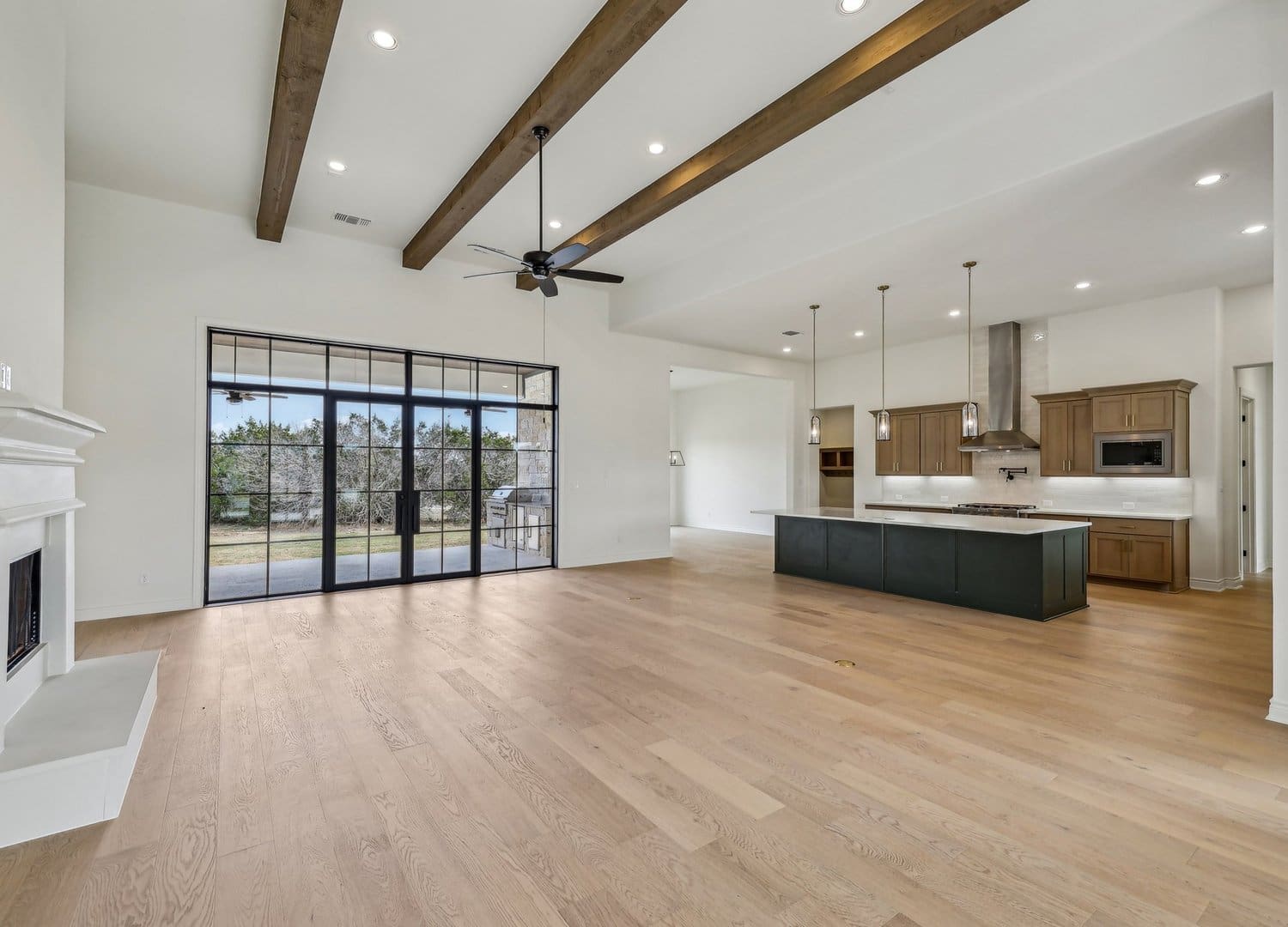
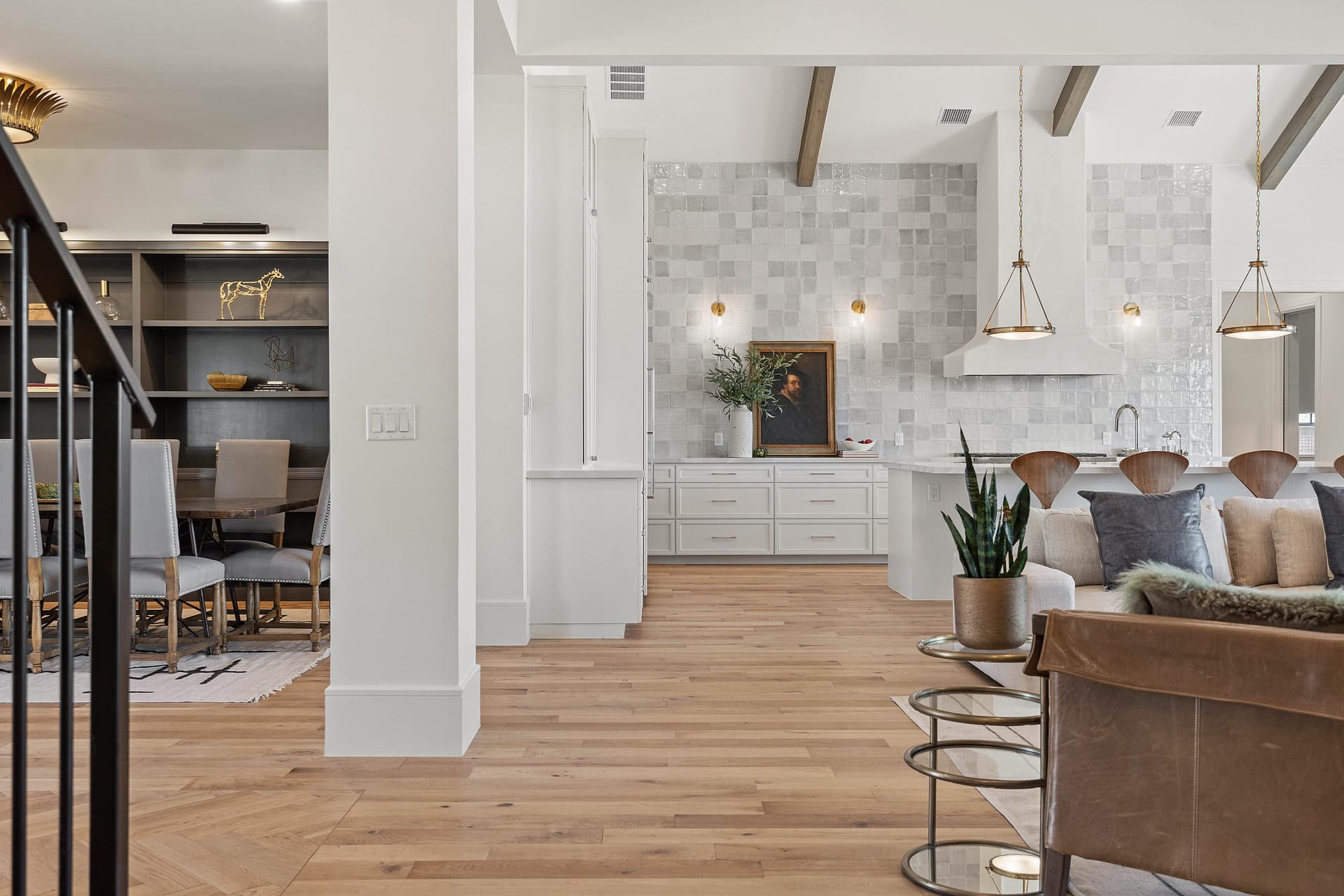
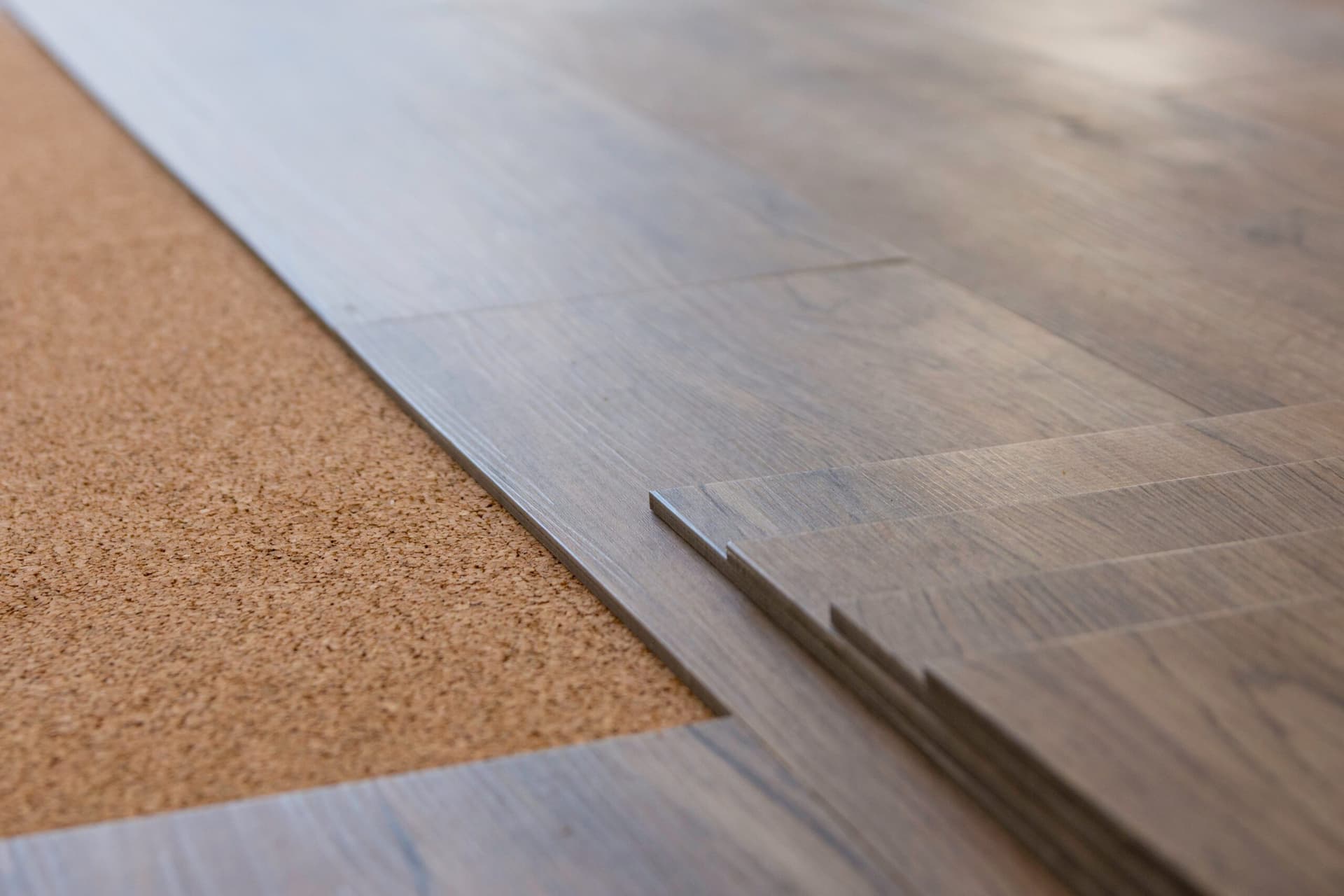
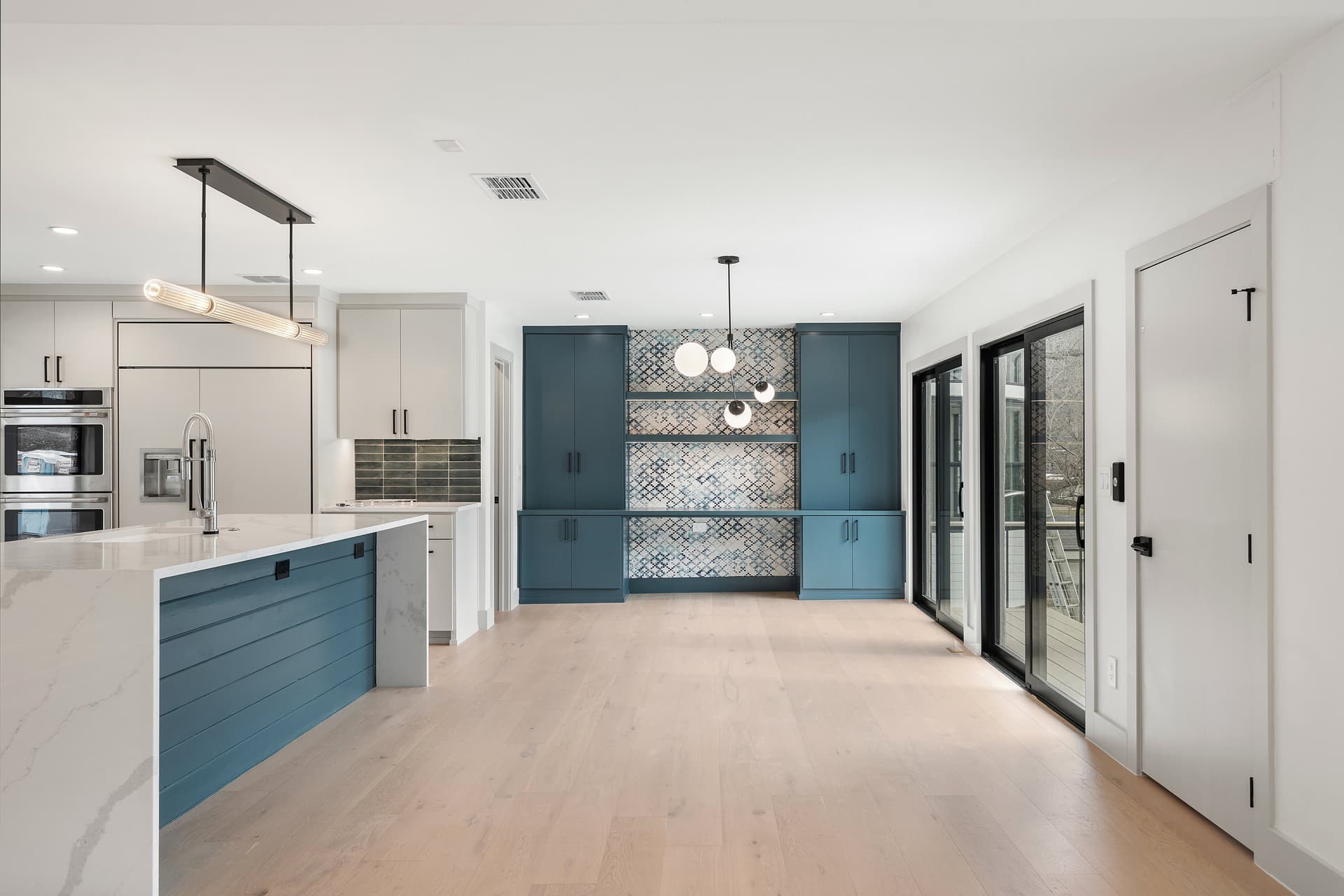
Explore solid hardwood, engineered hardwood, and vinyl alternatives with a wood look. The visual direction matters alongside the construction of the product and the conditions beneath it.
Discuss your material selectionPhotography shows finish references. Confirm the selected product, dimensions, and specification for your project.
Discuss the existing substrate, indoor conditions, and areas exposed to moisture.
Compare real wood and vinyl options with the intended use, budget, and maintenance expectations.
Review plank direction, stairs, thresholds, and adjoining finishes before the scope is finalized.
Explore a detail. Bring a better question to your project conversation.
Conceptual illustration · not to scale or an installation specification
A direction study makes the relationship between planks, openings, and adjoining rooms visible. The final layout also needs the selected product and site requirements.
From the main entrance, which way should the plank lines carry the eye?
Carry this detail into a clear installation brief.
Start with a material family. Then review the product and installation requirements for your space.
Sun Tile Corporation installs solid hardwood, engineered hardwood, and vinyl products with a wood look throughout Austin and Central Texas. Compare the actual product, site conditions, installation scope, and care requirements. Family-owned since 1984, with more than 75,000 flooring installations across materials. Request a free, itemized in-home estimate at (737) 704-3000.
Last updated: August 28, 2026
Hardwood floor installation costs in Austin depend on the species, grade, plank width and the condition of the substrate. Sun Tile provides a free, itemized in-home estimate so you get an exact price for your project rather than a range.
| Feature | Solid Hardwood | Engineered Hardwood | EVP |
|---|---|---|---|
| Surface | Real wood | Real wood surface over a supporting construction | Decorative vinyl surface |
| Moisture and room use | Confirm product and indoor requirements | Confirm product and indoor requirements | Confirm permitted rooms and exposure limits |
| Installation | Review product, substrate, and method | Review product, substrate, and method | Review product, substrate, and method |
| Future refinishing | Assess remaining usable wood and condition | Confirm manufacturer guidance and usable surface | Review product-specific repair or replacement |
| Service life | Depends on product, installation, use, and care | Depends on product, installation, use, and care | Depends on product, installation, use, and care |
Start by distinguishing real wood from a vinyl product with a wood appearance. Solid and engineered hardwood have different constructions; EVP is vinyl. Review the actual product, room conditions, substrate, installation requirements, care, and future repair options. Cost and refinishing potential need to be assessed for the selected product and project.
Austin's climate presents a genuine challenge for solid hardwood. The region swings between dry winters (30–40% relative humidity) and humid summers (65–80%), and wood moves with those changes. Proper acclimation — leaving the wood on-site for 3–7 days before installation — and maintaining indoor humidity between 35% and 55% year-round are essential. Engineered hardwood manages these swings better due to its cross-ply plywood core, which is why Sun Tile often recommends it for Austin homes without tight humidity control. Both options look identical from the surface.
Hardwood installation requires precise subfloor preparation, correct acclimation, and the right fastening method for the species and substrate — mistakes appear months later as squeaks, gaps, or cupping. Sun Tile Corporation's hardwood floor installers have served Austin and Central Texas since 1984, with over 75,000 flooring installations across residential, custom-home, and production-builder projects. We handle subfloor assessment and repair through final trim and cleanup, backed by the manufacturer warranty on your flooring.
Sun Tile Corporation installs hardwood and engineered wood floors across roughly a 50-mile radius of Austin, spanning Travis, Williamson, and Hays counties. What changes from one part of that radius to the next is not the wood — it is what the wood is going down over. Central Austin's pre-war neighborhoods are largely pier-and-beam over crawl space. Post-1970s Austin and the whole suburban ring are slab-on-grade, most of it post-tensioned because of Central Texas's expansive clay soils. The hills west of MoPac sit on the shallow soil and limestone of the Edwards Plateau, where hillside lots produce stepped and multi-level slabs. Each of those substrates demands a different moisture test, a different fastening method, and a different acclimation plan — and getting that judgment wrong is what produces cupping, gapping, and hollow spots a year after the floor looked perfect on install day.
Austin's older core — Hyde Park, Rosedale, Clarksville, Travis Heights, Bouldin Creek, Crestview — is dominated by pier-and-beam construction with a ventilated crawl space beneath the floor system. That geometry is genuinely favorable for solid hardwood: a wood subfloor takes fasteners directly, and nail-down installation over a properly conditioned plywood or plank subfloor is one of the most durable assemblies in residential flooring. It also brings its own problems. Crawl-space humidity migrates upward, so the subfloor's condition has to be checked rather than assumed, and older homes frequently have deflection, sistered joists, or previous layers of flooring that leave the deck out of plane. Many central-Austin homes also still have the original 1920s–1950s oak underneath carpet or vinyl, which is often worth uncovering and refinishing instead of replacing.
Most homes in Austin proper south and north of the core, and virtually all of the suburban ring, sit on slab-on-grade — commonly post-tensioned, because Central Texas clay shrinks and swells enough to crack a conventionally reinforced slab. A concrete slab cannot be nailed into and it holds moisture, so the assembly changes: engineered hardwood glued directly to the slab, or a floating engineered floor over an underlayment. Solid hardwood over slab is possible only over a properly built subfloor system and is rarely the right recommendation here. The controlling variable is slab moisture, and it has to be checked before installation, not eyeballed. Post-tension slabs add one more constraint: the tendons inside cannot be drilled or cut, so any testing or mechanical fastening must be planned around them.
West of MoPac — Bee Cave, Lakeway, Steiner Ranch, Spicewood, Lago Vista, and the Barton Creek area — the ground changes character. Shallow soil over Edwards Plateau limestone means slabs here often behave more predictably than the deep-clay slabs east of the city, but hillside lots produce stepped, multi-level, and split-elevation slabs where a wood floor has to run continuously across changes in plane. Flatness becomes the governing concern rather than moisture, and wide-plank engineered products — the dominant look in this corridor — are the least forgiving of a deck that isn't flat. Preparing high spots and low spots before a single plank is set is the difference between a flat floor and a hollow-sounding one. Homes here that sit vacant seasonally also cycle through wider interior humidity swings than a continuously occupied house, which pushes the recommendation toward engineered rather than solid wood.
Southwest of Austin, the Hill Country communities served through our Dripping Springs service area — including Driftwood, the Reunion Ranch and Rim Rock developments, and the Wimberley corridor — skew toward custom homes on large lots with longer runs of continuous flooring and fewer interior walls to break them up. Long uninterrupted runs are where wood movement shows up most visibly, because seasonal expansion and contraction accumulates across the full width of the run rather than being absorbed at frequent wall lines. That makes expansion space at the perimeter, correct plank width selection, and honest acclimation more consequential here than in a compartmentalized floor plan. Many of these homes are also on well water and propane with less consistent year-round conditioning than a city home, which again favors engineered construction. Wood flooring should be installed and allowed to acclimate at normal living conditions, and those conditions should be held before, during, and after installation rather than only on install day.
The Williamson County growth corridor is where most of the metro's new construction is happening, and new construction brings one specific hardwood problem: green slabs. Concrete continues releasing moisture for months after pour, and a builder schedule that wants flooring in before the slab has dried is a common cause of hardwood failure in new Austin-area homes. A slab poured in a wet spring, or one that sat exposed to rain before the house was dried in, takes considerably longer to dry. Checking slab moisture before installation replaces the guess with a real answer, which matters as much to a builder protecting a warranty position as it does to a homeowner. Sun Tile has worked as a flooring subcontractor to Central Texas production and custom builders since 1984, which means we schedule around slab readiness rather than against it, and we will say so when a floor is not ready to go down.
Sun Tile installs hardwood and engineered wood floors within roughly 50 miles of Austin, across Travis, Williamson, and Hays counties. Each city page covers the housing stock, subfloor conditions, and wood floor installation details specific to that community — including the surrounding Hill Country areas served through them, such as wood floor installation in Driftwood, TX and the Reunion Ranch and Rim Rock communities through our Dripping Springs service area. The Lake Travis corridor is covered the same way: Steiner Ranch, Spicewood, and Lago Vista are served through our Bee Cave and Lakeway pages. Explore hardwood floor installation in your city:
Weighing solid vs engineered? Read our Central Texas comparison guide or check which materials hold up best in Austin's climate.
A material choice becomes a flooring scope when the layout, preparation, and installation details come together.
Share the space, intended use, and finish direction.
Compare the selected product and its requirements.
Identify preparation needs and adjoining finishes.
Discuss access, installation timing, and final details.
Tell us about your materials, approximate area, site conditions, and target timing. Our team can discuss the flooring scope with you.