
Flooring for commercial spaces.
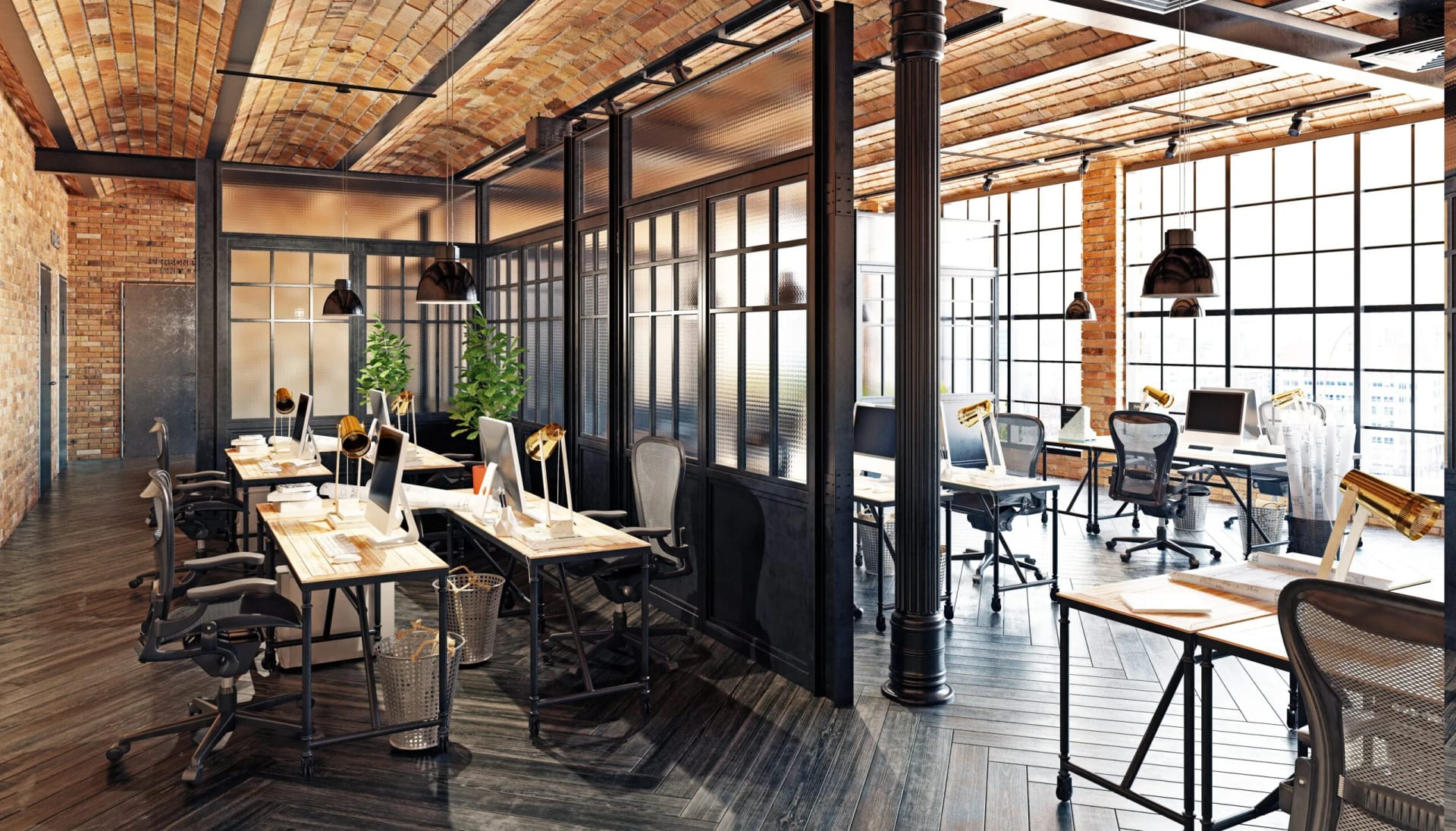
Connect the specification to the site.
Sun Tile installs flooring for commercial spaces across Austin and Central Texas. A useful scope connects the specified finishes to how the space is used, how the site can be accessed, and how the work fits the wider project.
Family-owned since 1984. More than 75,000 flooring installations company-wide across Austin and Central Texas.
Meet the company behind the work- 01
Documents & use
What do the plans and finish schedule specify, and what traffic and maintenance will the space see?
- 02
Access & phasing
Will the space be occupied? Which work areas, access windows, and adjacent trades need coordination?
- 03
Closeout
What submittals, walkthrough items, and handover requirements belong in the agreed scope?
Designed around the life of the building.
A commercial floor connects the way a space looks, how people move through it, and how it will be maintained. Use these setting references to frame your project brief.
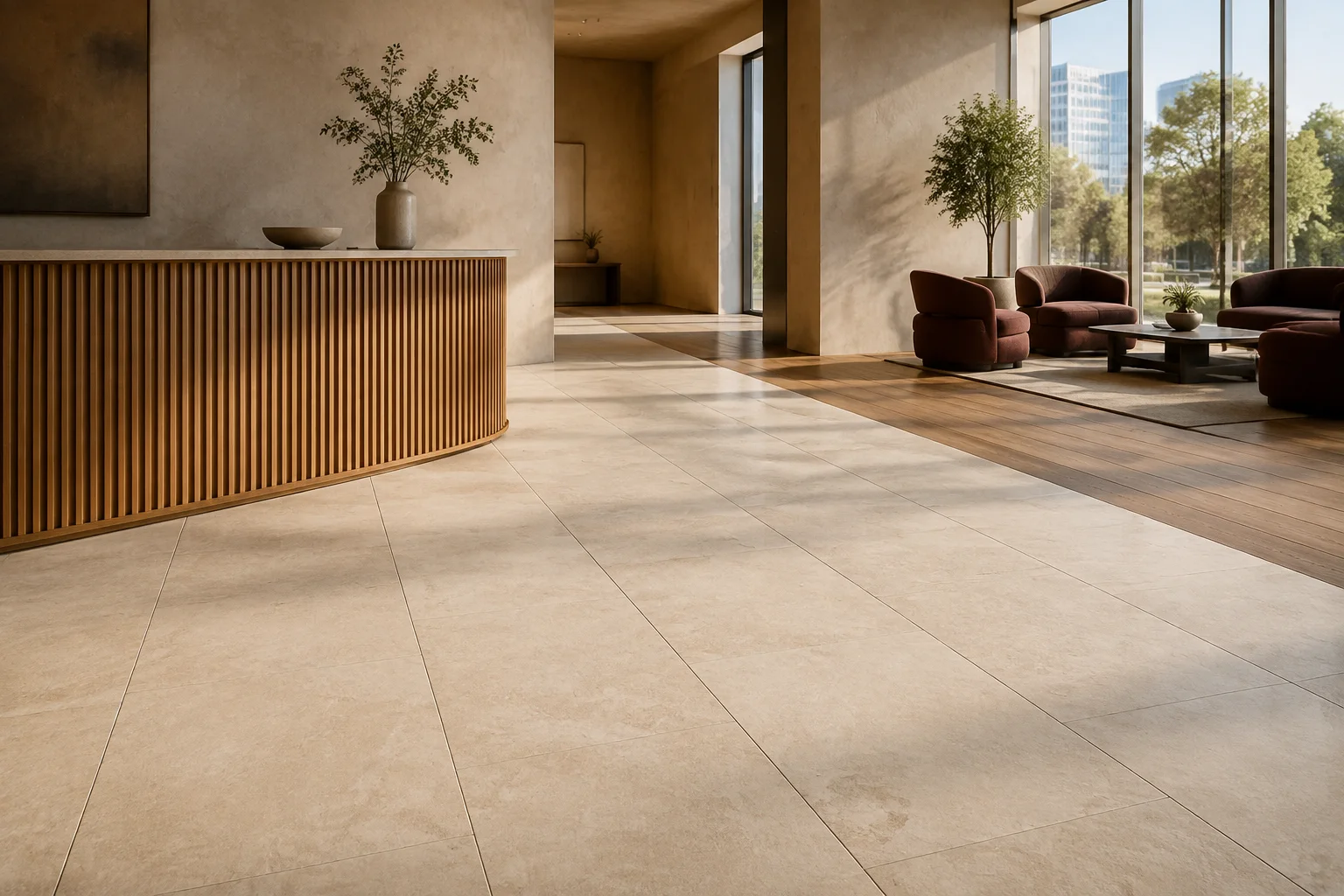
01 / The uninterrupted field
Review traffic, daylight, floor direction, and finish transitions.
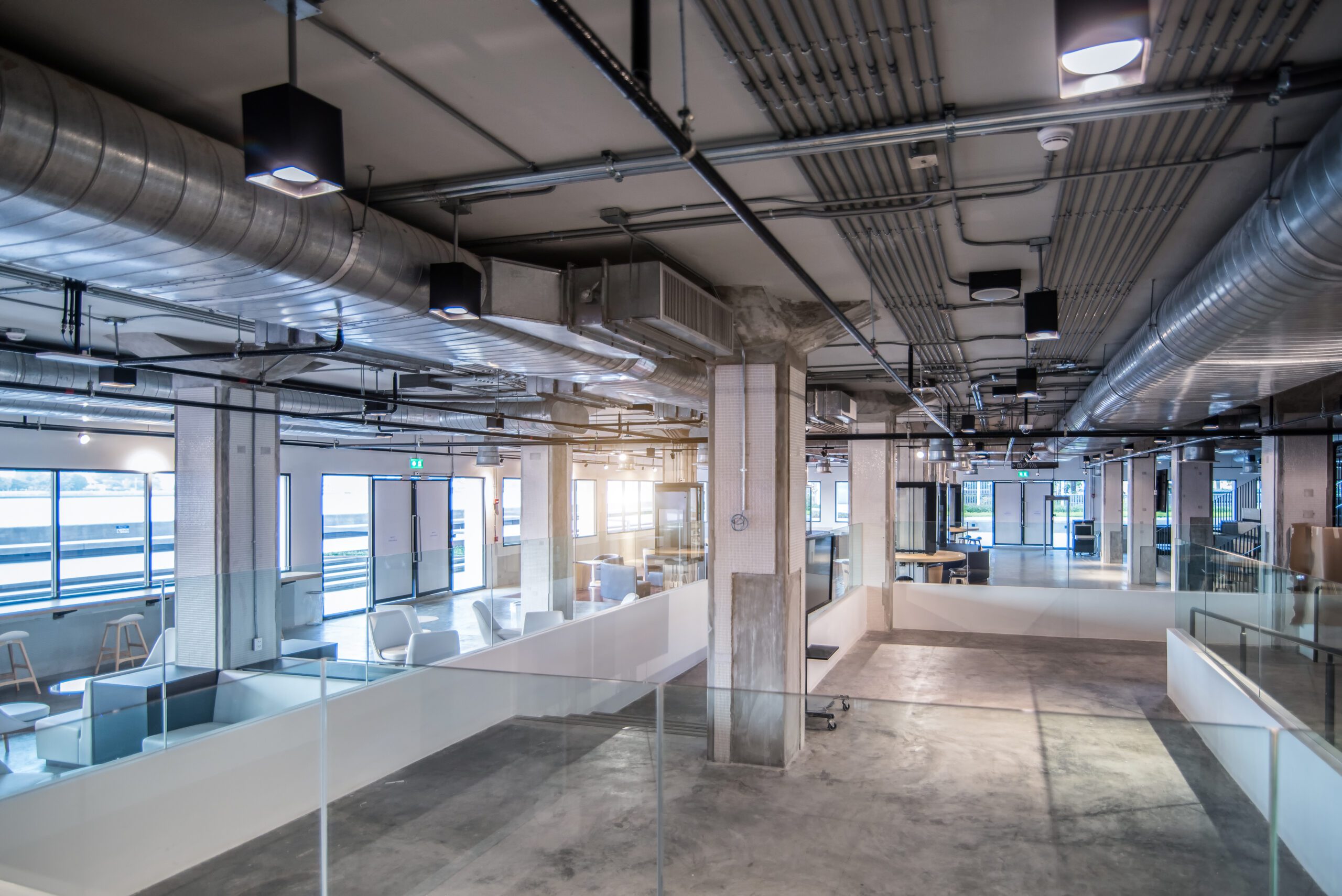
02 / The access conversation
Connect room boundaries to access, occupancy, and adjacent trades.
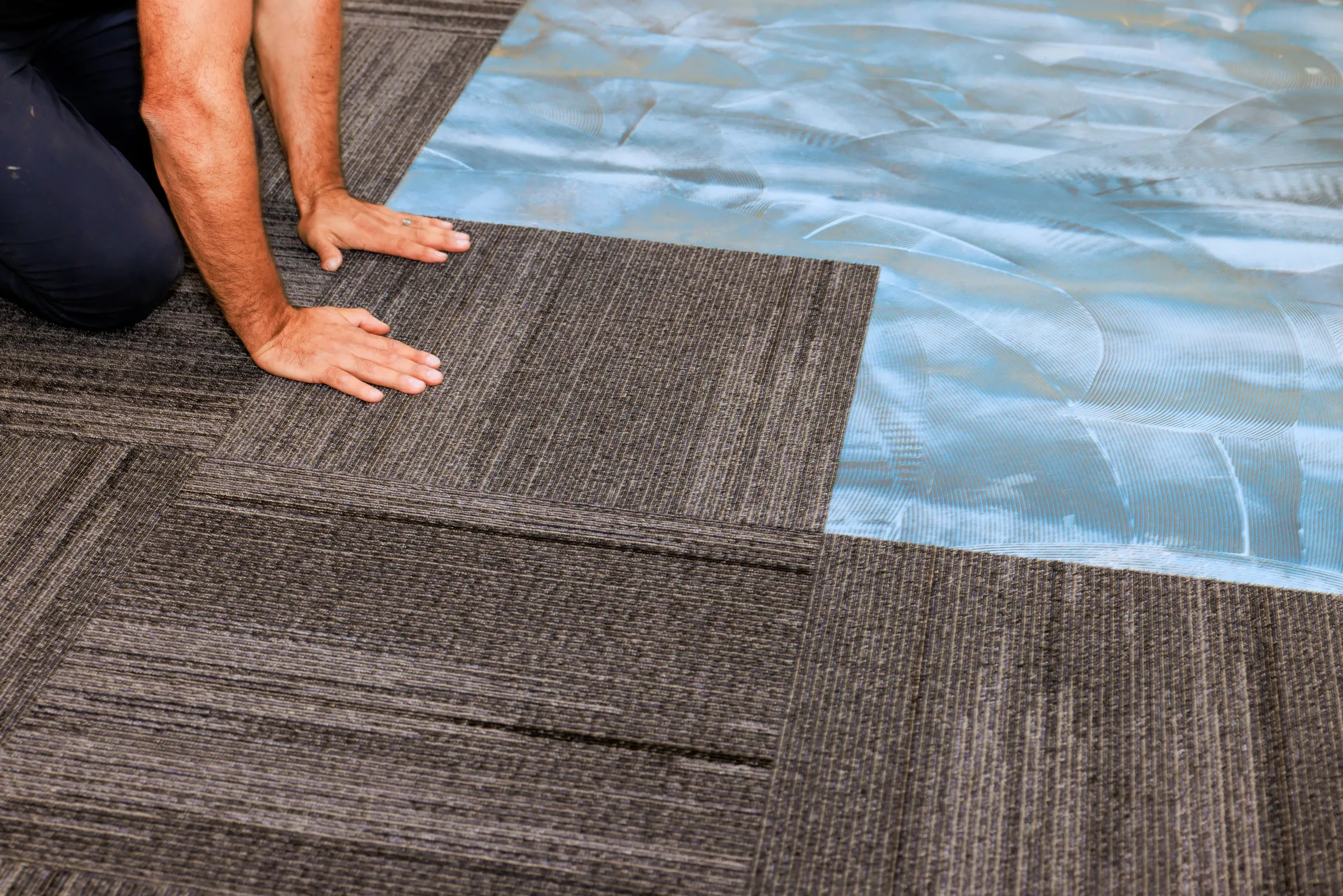
03 / The selected assembly
Confirm product instructions, substrate requirements, and maintenance.
The generated design concept and reference photography illustrate commercial settings and material decisions. They are not presented as Sun Tile project photography.
Explore material decisionsSee the coordination behind the floor.
Explore four conversations that connect the finish schedule to a commercial space. Select a stage to see which decisions it brings into focus.
Make every finish boundary explicit.
The plan and finish schedule need to describe the same space. Resolve the transitions, use requirements, and exclusions before the scope is agreed.
- Room-by-room finish schedule and product data
- Transitions, wall base, and adjoining elevations
- Traffic, maintenance, and wet-area requirements
A bid that starts with a shared picture of the work.
Bring this stage’s questions into your project inquiry.
The use of the space changes the conversation.
Start with how the building will be used. Each environment brings its own finish, maintenance, access, and coordination questions.
Office Build-Outs
Flooring for offices, co-working spaces, and tenant improvements. Connect the finish schedule to traffic, access, and the general contractor’s wider sequence.
Retail Spaces
Review traffic, appearance, cleaning, and occupied-space constraints for retail stores and showrooms. Discuss access windows and phasing in the project scope.
Multi-Family Housing
Connect unit plans and finish packages across apartments, condominiums, and townhome communities. Review shared spaces, release order, and unit-specific details.
Restaurants & Hospitality
Kitchens, dining rooms, and guest areas bring different exposure and maintenance needs. Review each specified product and assembly for the intended space.
Medical Facilities
Discuss cleaning protocols, room-use requirements, access, and transitions with the design and facilities team before confirming products and installation scope.
Educational Institutions
Review room use, maintenance, and access for schools and training spaces. Break periods and occupied-area constraints belong in the scheduling conversation.
Why Contractors Choose Sun Tile
We make commercial flooring simple. One team, one point of contact, and coordination around the agreed scope and installation schedule.
Turn-Key Management
Connect the flooring scope, material decisions, field communication, and final review through the Sun Tile project team.
Considered Coordination
Bring occupancy, delivery access, and operating hours into the scope review. Agree workable installation areas and sequencing with the project team.
Commercial Expertise
Family-owned since 1984, with experience across tile, wood, vinyl, and carpet. Review the selected product and assembly against the conditions of your project.
Built for Commercial Scale
Three pillars that set us apart on every commercial project.
Competitive Bidding
Transparent, detailed proposals that break down every cost. We work with your budget and timeline to deliver the best value without compromising quality.
- Detailed line-item estimates
- Material and labor breakdowns
- Value engineering options
- Straightforward proposals, explained before work begins
Scale & Capacity
From a single suite to multiple buildings, the scope needs to connect floor area, release order, material availability, and field coordination.
- Review work areas and the anticipated sequence
- Confirm selected-material availability
- Connect site contacts and delivery requirements
- Proven track record: 75,000+ flooring installations company-wide
Dedicated Support
Our project managers stay engaged from day one through final punch list and beyond. We stand behind our work and remain reachable long after installation.
- Project managers assigned to larger projects
- Regular progress updates
- Post-installation support
- Manufacturer warranty guidance on materials
Commercial Tile Contractor Austin TX
As a commercial tile contractor in Austin, Sun Tile Corporation serves offices, retail spaces, restaurants, hotels, medical facilities, and multi-family housing. We install ceramic, glazed porcelain, large-format rectified tile (up to 48"), and specialty tile throughout Central Texas — handling projects of every size, from single suites to full communities. Call (737) 704-3000 for a competitive bid.
Commercial tile installation connects substrate condition, the selected assembly, access, and the wider construction schedule. Discuss product-specific moisture and flatness requirements, adjoining finishes, and trade coordination as part of the project scope.
Commercial Tile Applications
Large-Format Tile Installation
Large-format rectified porcelain — 24×24, 24×48, and plank formats up to 48 inches — is one of the most commonly specified floors in Austin commercial work, because fewer grout joints mean a cleaner look and lower long-term maintenance. It is also the least forgiving tile to install. Large-format tile requires a substantially flatter substrate than standard tile, so the slab has to be brought into tolerance before a single tile is set.
Our approach on large-format commercial floors: survey and correct slab flatness first, set the tile for full, even coverage underneath with no hollow spots, control the joint offset to keep lippage in check, and add extra crack-prevention prep where slab movement or curing schedules warrant it. Skipping any of those steps is what produces lippage, hollow spots, and cracked tile on a commercial floor a year later.
We serve commercial tile clients in Austin, Cedar Park, Round Rock, Georgetown, Pflugerville, and all of Central Texas. Submit your plans or call (737) 704-3000 to discuss site review and a project-specific bid.
Restaurant & Commercial Kitchen Tile Installation in Austin
Restaurant tile installation splits into two very different jobs. Back of house is a sanitation floor: abrasive-grit quarry or porcelain tile, set and grouted in a chemical-resistant epoxy system, coved up the wall and pitched to drain. Front of house is a design floor that still has to be safe wet. Sun Tile Corporation has installed both across Austin restaurants, hotels, and hospitality spaces since 1984. Bids: (737) 704-3000.
Restaurant flooring is the one commercial category where the wrong specification shows up as a health-inspection problem rather than a warranty claim. The FDA Food Code requires floors in food preparation, warewashing, and walk-in areas to be smooth, durable, and non-absorbent — which in practice rules out most of what works elsewhere in a commercial building. It is also the category where the schedule is least forgiving: a kitchen floor is on the critical path to opening, and every day of cure time has to be in the plan before demolition starts, not discovered afterward.
Back-of-House: Commercial Kitchen Floors
A commercial kitchen floor gets hot water, grease, food acids, and caustic cleaners daily. Standard cement grout gives all of that a porous path straight to the setting bed, which is why the long-standing specification for a kitchen is abrasive-grit quarry tile or unglazed porcelain set and grouted in a chemical-resistant, water-cleanable epoxy system. Epoxy is slower and more expensive to install than cement-based systems, and it is also the reason the floor is still serviceable ten years in.
Three details separate a kitchen floor that passes inspection from one that does not. The wall juncture gets a coved tile base rather than a square butt joint, so there is no square corner for soil to collect in and the floor can be washed down into the room instead of into the wall cavity. The floor is pitched toward floor drains or trench drains, and that pitch is built into the setting bed — a flat slab does not become a draining floor by accident. And the waterproofing under the tile is continuous, turned up at the walls and tied into the drain flanges, because in a kitchen the tile assembly is the second line of defense, not the first.
Tile selection back of house is about texture, not looks. Kitchens are walked on wet by definition, so the floor tile needs strong wet slip resistance, and a commercial kitchen is a place to specify well above the minimum rather than right at it. Abrasive-grit quarry tile earns its place here for exactly that reason.
Front-of-House: Dining Rooms, Bars & Hotel Lobbies
The dining room is a different problem: it has to look like the concept, survive chair-leg traffic and dropped flatware, and still be safe when a server spills a tray. Large-format rectified porcelain and wood-look porcelain plank do most of this work in Austin restaurants — porcelain takes the abuse, and the same large-format substrate flatness discipline described above applies, because lippage in a dining room is a trip hazard and not merely a cosmetic complaint. Commercial LVT is common in fast-casual and hotel back-corridor work where speed of installation and acoustic performance matter more than the finish. The transition between the dining room and the kitchen line is worth designing deliberately rather than leaving to the field: it is where two different setting systems, two different slip requirements, and usually a change in floor height all meet.
Natural Stone Flooring for Commercial Installs
Natural stone still shows up in Austin commercial work where the floor is part of the brand — hotel and office lobbies, amenity decks, restaurant entries, and feature walls. It installs differently from porcelain in three ways worth pricing up front. Light-coloured and translucent stone such as marble and some limestone needs a white, non-staining setting mortar, because a grey mortar will read through the stone once it is wet-set. Stone is dimensionally less consistent than rectified porcelain, so the slab has to be flatter, not less flat, than a comparable tile floor. And finish choice is a safety decision before it is an aesthetic one: polished stone at a lobby entrance is a slip liability the first time it rains, so honed finishes plus a properly sized walk-off matting zone are the standard answer on a commercial entrance. Sealing is a maintenance program, not a one-time installation step, and we hand that schedule over at closeout.
We install restaurant, hospitality, and natural stone flooring across Austin and Central Texas — including Austin, Round Rock, Cedar Park, and Georgetown. Send plans or call (737) 704-3000 for a competitive bid and a realistic cure-time schedule.
Commercial Carpet Installation Austin TX
Commercial carpet installation cost in Austin depends on whether the project uses broadloom or modular carpet tile. Sun Tile Corporation has installed commercial carpet for Austin offices, hotels, schools, and multi-family properties since 1984 — working nights, weekends, and phased shifts around occupied space. Competitive line-item bids: (737) 704-3000.
Sun Tile Corporation installs commercial carpet and modular carpet tile for Austin offices, hotels, educational facilities, and multi-family housing. Our commercial carpet installers carry the experience and crew capacity to complete large-scale projects on schedule — from a single-floor office to a full apartment community.
Commercial carpet is a different installation from residential carpet, not just a different product. There is no pad and no stretching on most commercial work: broadloom is direct-glued to the slab and carpet tile is set in pressure-sensitive release adhesive, which means the substrate does all the work. Slab moisture is the usual failure point — adhesive that goes down over a slab still giving off moisture will release later, so concrete gets tested before adhesive is specified. Carpet tile also has to be set to the manufacturer's directional arrows in a consistent quarter-turn, monolithic, or ashlar layout; mixing them is the single most common reason a finished office floor reads as patchy under overhead light.
Commercial Broadloom Carpet
Ideal for hotels, multi-family corridors, and open-plan offices. We direct-glue and seam commercial broadloom to commercial-grade standards for high-traffic environments.
Modular Carpet Tile
Popular for corporate offices, call centers, and educational facilities. Modular carpet tiles allow flexible layouts, easy cable access under raised floors, and spot replacement — lowering total cost of ownership versus broadloom.
All commercial carpet projects are coordinated around your business hours to minimize disruption. We work nights, weekends, and phased shifts to keep your operations running. Contact us for competitive commercial carpet bids: (737) 704-3000.
How Much Does Commercial Flooring Cost in Austin?
Commercial flooring cost in Central Texas depends on the material — LVT, modular carpet tile, VCT, porcelain, ceramic tile, and engineered hardwood all price differently — plus substrate condition, floor prep, layout complexity, and after-hours scheduling. Sun Tile provides a free, itemized bid so you get an exact price for your project rather than a general range.
What actually drives a commercial bid up or down is rarely the material: it is slab condition and floor prep, demolition and disposal of the existing floor, transitions and base, whether the space is occupied and has to be phased, and whether crews are working nights or weekends around your operations. Larger square footages generally price better per foot; heavily cut-up floor plans price worse.
Every Sun Tile commercial proposal breaks material and labor out line by line, with value-engineering alternates where they make sense, so you can compare bids on the same basis. Send plans or a square-footage estimate to info@suntile.com, or call (737) 704-3000 for a site visit and a firm number.
Last updated: August 29, 2026
Commercial Flooring Across Austin and Central Texas
Sun Tile Corporation installs commercial flooring throughout the Austin metro — roughly a 50-mile radius from Austin, across Travis, Williamson, and Hays counties. That covers downtown and East Austin, the Domain and North Burnet, the Balcones corridor and Northwest Austin, Round Rock and Brushy Creek, Georgetown, Liberty Hill and Andice, Leander and Cedar Park, Pflugerville and Hutto, South Austin, Bluff Springs and Del Valle, and the I-35 South corridor through Kyle, Buda, and San Marcos.
Downtown Austin, East Austin, and the Central Core
In the central core the hard part of a commercial floor is rarely the floor. It is access. Mid- and high-rise buildings downtown, along Rainey Street, and through East Austin run on reserved freight elevators and narrow loading-dock windows, and most building rules push demolition, grinding, and adhesive work into nights and weekends. We schedule material deliveries against the dock calendar rather than the installation calendar, because a pallet of tile that cannot get upstairs stops the job as surely as a bad slab.
Occupied office space gets phased by floor or by suite so tenants keep working through the install. In mixed-use buildings with residential above commercial, the specification usually carries a sound-transmission requirement, which means an acoustic underlayment under hard-surface floors instead of a direct-glue assembly. That decision belongs in the bid, not in the field — it changes both the material takeoff and the finished floor height at every transition.
The Domain, North Burnet, Tech Ridge, Balcones, and Northwest Austin
North Austin's corporate and retail corridor is tenant-improvement territory. Modular carpet tile and LVT carry most of these scopes because both install quickly over a prepared slab and both can be replaced in sections years later without re-flooring the whole suite — the reason carpet tile keeps winning corporate specs even where broadloom is cheaper up front.
Northwest Hills, Great Hills, the Arboretum, and the Balcones corridor lean toward smaller professional and medical-office suites. Those jobs are less about square footage and more about sequencing around appointments and about cove base, transitions, and thresholds detailed cleanly at every doorway, because that is what a tenant looks at on the walkthrough.
The Balcones area is also where Austin's two different building grounds meet, and that changes what a commercial floor needs. The Balcones Escarpment is the fault zone running roughly north–south through the western side of the metro: east of it the ground is Blackland Prairie clay that shrinks and swells with the season, and west of it the ground is Hill Country limestone. Buildings along Balcones Drive, through Balcones Woods, and out toward the Balcones Canyonlands sit on or near that line. Practically, an east-side slab is the one where seasonal ground movement calls for extra crack-prevention prep before tile goes down, while a west-side building on limestone is usually a flatness-and-moisture question instead. We look at which side of the escarpment a property sits on before pricing the prep, because guessing wrong shows up later as a crack line rather than as a change order.
Round Rock, Brushy Creek, Pflugerville, Hutto, Georgetown, Leander, and Andice
The Williamson County growth corridor is where the large, new, open square footages are — multi-family, medical office parks, school district facilities, and retail on ground that was pasture a decade ago. Large contiguous areas price better per square foot than heavily cut-up plans, so these are the projects where a competitive line-item bid separates itself most from a lump-sum number.
New construction also means new slabs, and a new slab is a moisture question before it is a flooring question. Concrete that is still releasing moisture will fail an adhesive-set floor months after the ribbon cutting, which is why the test comes before the adhesive is specified rather than after the schedule slips.
Brushy Creek and the Round Rock–Cedar Park seam carry most of this corridor's volume, but the corridor runs further out than the city limits suggest. Northwest of Georgetown the commercial work thins into agricultural and small-community buildings — Liberty Hill, Florence, and Andice, the community at FM 2338 and FM 970 about fifteen miles northwest of Georgetown — and those projects are quoted differently. Out there a job is usually a single mobilization with no second trip budgeted, so the site visit does more work up front: we measure, test the slab, and confirm material availability in one pass rather than discovering a leveling problem on install day sixty minutes from the shop. Andice sits at roughly the northwest edge of our fifty-mile service radius, and we say so plainly at bid time rather than after a schedule is set.
South Austin, Bluff Springs, Del Valle, Manor, and the I-35 South Corridor
Sun Tile's headquarters sits on the I-35 corridor in Buda, so South Austin, Bluff Springs, Del Valle, Manor, Kyle, Buda, and San Marcos are effectively home ground for our crews — a real scheduling advantage on projects that need an early-morning start or a prompt site visit. The work down here skews toward service retail, light industrial and back-of-house space, and multi-family, where VCT, LVT, and commercial carpet tile do most of the heavy lifting.
Bluff Springs is the closest of those to our shop. It is the community on Onion Creek in southern Travis County, about eight miles south of downtown Austin and two miles east of I-35, and our Buda headquarters is roughly seven miles further down the same highway — so a Bluff Springs, Onion Creek, or south I-35 frontage property is a short run for a crew and an easy, prompt site visit. The commercial mix along this stretch is service retail, warehouse and light-industrial space, contractor and fleet buildings, and the multi-family that has filled in around Slaughter Lane and William Cannon. Two things come up here more than elsewhere in the metro. Onion Creek's floodplain means some of this building stock has taken water at some point, and a slab that has been wet is a moisture-testing job before it is a flooring job. And warehouse and light-industrial floors are usually rolling-load floors, which pushes the specification toward VCT, sheet vinyl, or a through-body porcelain over a properly flattened slab rather than toward anything that relies on a thin adhesive bond.
West of the city — Westlake, Bee Cave, Lakeway, and Dripping Springs — the mix shifts again to boutique retail, hospitality, and amenity buildings, where porcelain, large-format tile, and natural stone show up in the lobby and the resilient goods go behind the scenes.
What Stays the Same Everywhere: the Slab
Central Texas commercial buildings sit on slab-on-grade almost without exception, and the slab drives more of a flooring bid than the material does. Two checks come before anything is specified. Moisture first: concrete still releasing moisture can fail an adhesive-set floor months after occupancy, so slab conditions are checked before an adhesive or a moisture-mitigation approach is chosen. Flatness second: large-format tile and long vinyl planks need a flatter substrate than standard-format goods, so any leveling work belongs in the line-item bid rather than in a change order.
On large commercial tile floors, the installation also has to account for how the slab moves rather than treating the tile as one rigid sheet. Skipping that step is the most common reason a big-box or corridor tile floor cracks along a straight line a year or two after installation, and it costs almost nothing to do correctly at bid time.
Commercial flooring by city
Each city page covers the local market in more detail, including residential work. Bidding a commercial project? Call (737) 704-3000 or send plans to info@suntile.com.
- Flooring in Austin, TX
- Flooring in Round Rock, TX
- Flooring in Georgetown, TX
- Flooring in Cedar Park, TX
- Flooring in Pflugerville, TX
- Flooring in Buda, TX
- Flooring in Kyle, TX
- Flooring in Dripping Springs, TX
- Flooring in Leander, TX
- Flooring in San Marcos, TX
- Flooring in Lakeway, TX
- Flooring in Bee Cave, TX
- Flooring in Hutto, TX
- Flooring in Liberty Hill, TX
- Flooring in Manor, TX
Let's Build Your Commercial Space
Ready to discuss your next project? Our commercial team is standing by to review your plans and deliver a competitive proposal.
Commercial Flooring Questions
What types of commercial flooring do you install?
Can you work nights and weekends to avoid business disruption?
How do you handle large multi-unit projects?
Do you provide competitive bids for general contractors?
What documentation do you provide for commercial work?
What is your typical timeline for a commercial project?
Do you offer warranties on commercial installations?
How do I get started with a commercial flooring project?
What type of tile is best for commercial floors in Austin?
How much does commercial tile installation cost in Austin TX?
Do you install commercial carpet tile in Austin?
Do you provide commercial flooring in Cedar Park and surrounding cities?
What makes Sun Tile a reliable commercial tile contractor in Austin?
How much does commercial carpet installation cost in Austin?
How is commercial carpet installation different from residential carpet?
How much does commercial flooring cost per square foot in Austin?
What flooring is required in a commercial kitchen in Austin?
How long does a restaurant floor take to install before we can open?
Do you install natural stone flooring for commercial projects?
What flooring works best in a restaurant dining room?
Do you install large-format tile for commercial projects?
Which Austin-area cities and commercial districts do your crews cover?
How far from Austin will you travel for a commercial flooring project?
How does Central Texas slab construction affect a commercial flooring bid?
Do you work as a flooring subcontractor under a general contractor's schedule?
GC or developer bidding a project? See our commercial flooring options guide for Austin GCs and developers, or our office flooring & office carpet installation guide for office build-outs.