
Tile Installation in Austin
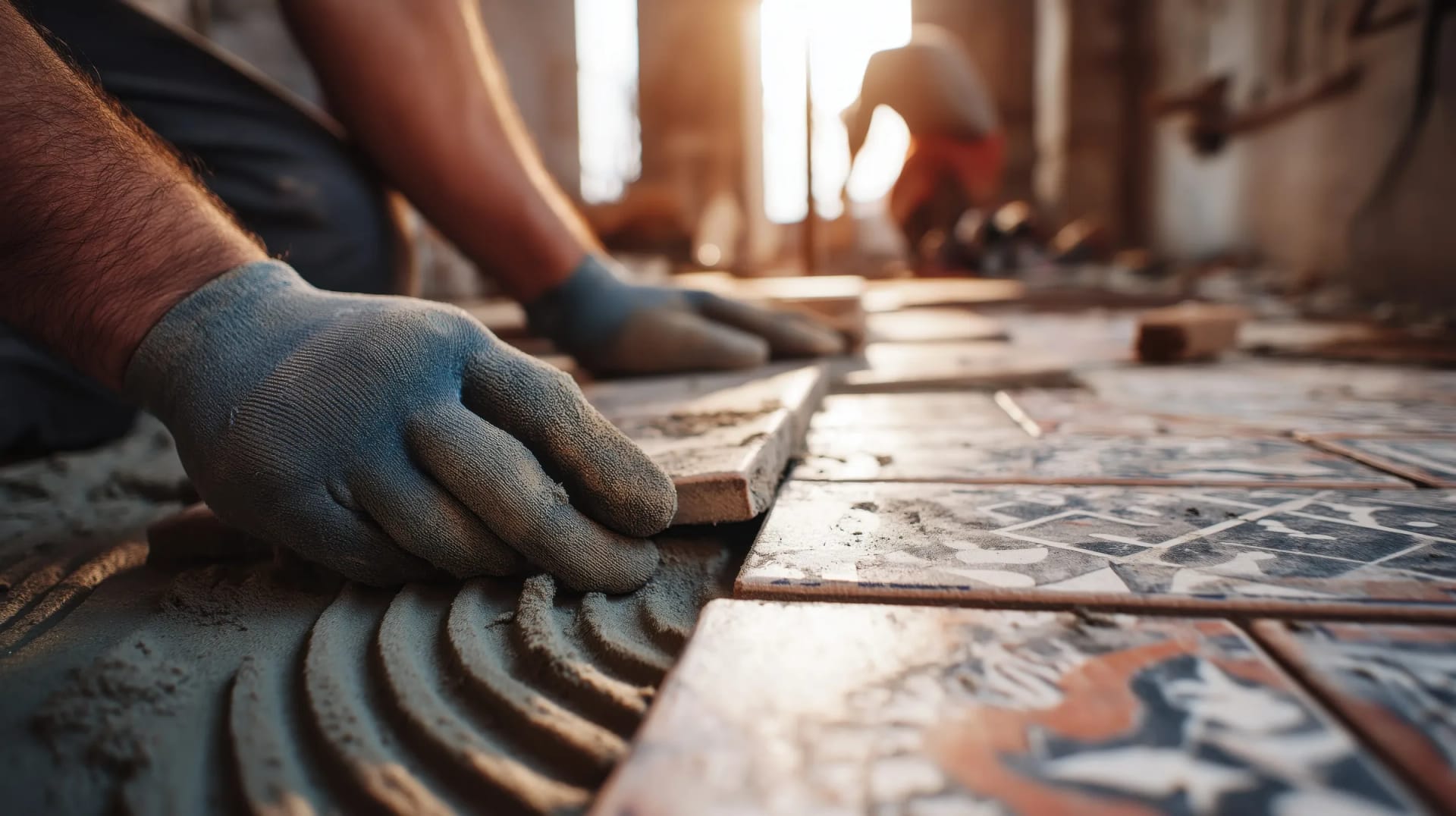
The finish starts with a considered layout.
Open the questions below to connect a finish decision with the work it asks of the project. Bring the answers you have; identify the details that still need review.
01Where does the eye start?
Identify the main sightline and the points that need to align. Room center, fixture center, and a doorway can suggest different starting points.
02What happens at the edges?
Review perimeter pieces before committing to the field. The room dimensions, tile format, and joint width change those edge conditions together.
03What meets this tile?
Bring adjoining flooring, thresholds, cabinetry, and exposed edges into the discussion. Confirm the intended transition with the chosen products and site elevations.
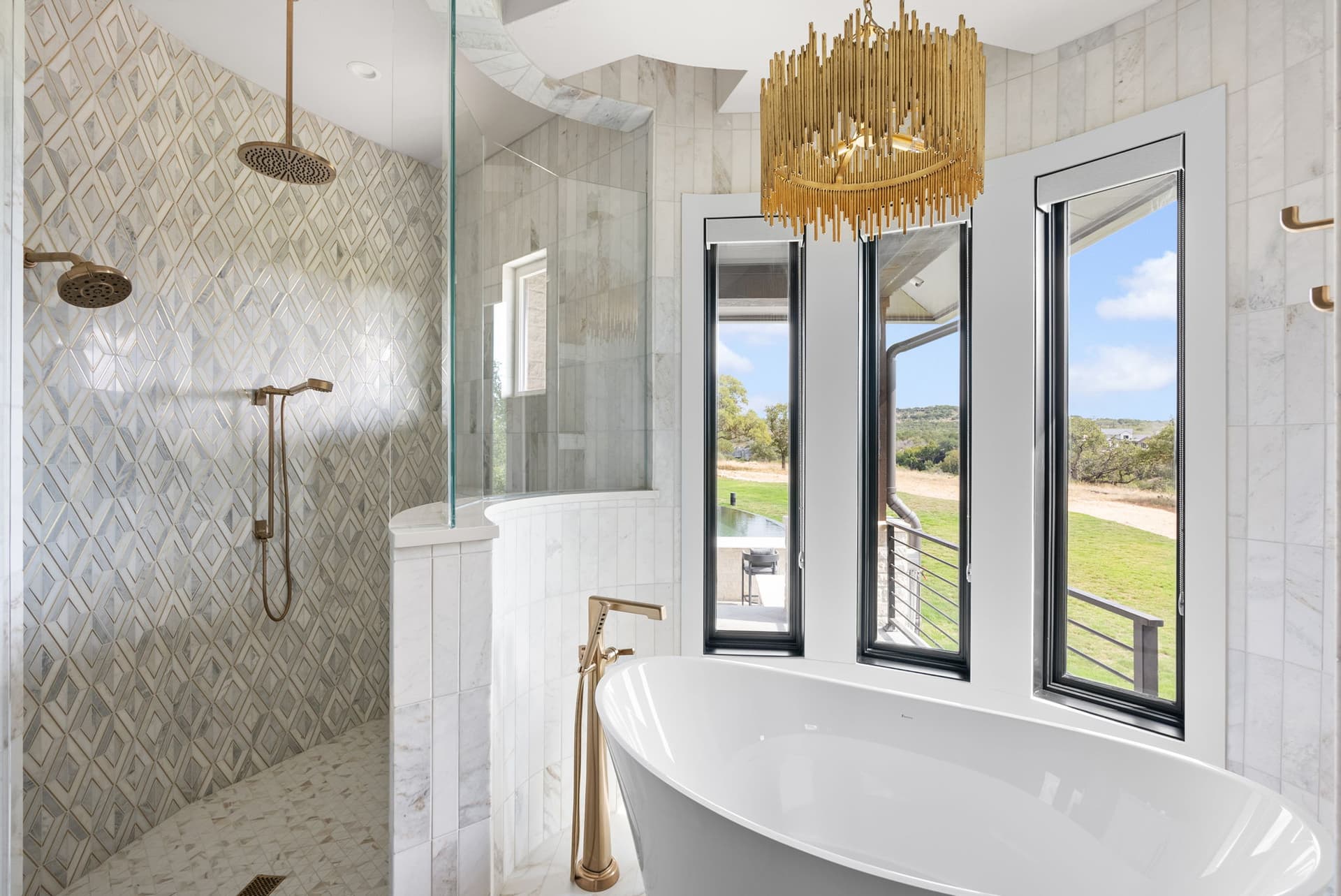
Finish reference · appearance and installation requirements vary by product.
Professional Tile Installation in Austin, Texas
Sun Tile Corporation provides expert tile installation services to homeowners and builders in Austin and throughout Travis County. Family-owned since 1984, the company has completed 75,000+ flooring installations across Austin and Central Texas. Bring your material, site, and timing requirements to a discussion with our team. As the trusted flooring contractor in Austin, TX, we install every major flooring type from a single local team.
Sun Tile Corporation provides tile installation in Austin, TX — family-owned and operated since 1984 with 75,000+ Central Texas installations. Product selection and installation requirements should be reviewed against site conditions before the scope is agreed. Discuss your project: (737) 704-3000.
What Tile Installation in Austin Actually Involves
Almost every home in Travis County sits on a post-tension or slab-on-grade concrete foundation, and that single fact drives most of what a tile installation in Austin requires. Central Texas expansive clay moves seasonally, so the slab under your floor is never perfectly static. Slab conditions are checked and corrected before anything is set, because tile telegraphs every high and low spot in the substrate — and the larger the tile, the less forgiving it is.
Where slab movement or a fresh pour is a factor, extra preparation goes down between the substrate and the tile. It is an extra step many bidders leave out to sharpen a number, and it is a common reason a Austin tile floor develops a crack line a year or two after installation. Wet areas — showers, tub surrounds, and entries — are waterproofed before tile is set rather than relying on the tile and grout alone.
Layout is decided before the first tile is set — dry-laying to find the centerlines, planning cuts so full tiles land where the eye goes and slivers do not end up at a doorway, and planning the pattern so it reads flat rather than lippy. Perimeter and field transitions are planned in at the intervals the floor size calls for. Grout is sealed after cure, and natural stone is typically sealed at installation and periodically after — Austin's hard water leaves visible mineral deposits on anything left unsealed.
For material options, installed cost ranges, and a fuller comparison guide, see our tile installation in Austin resource.
Working on an office build-out, retail space, restaurant, or multi-family project in Austin? See our commercial flooring services for bidding, after-hours scheduling, and project management.
How Much Does Tile Installation Cost in Austin?
Tile installation cost in Austin depends on the tile itself — natural stone sits at the top of the range, with ceramic and porcelain below it — plus subfloor leveling, waterproofing, tearing out an existing floor, and pattern complexity. A project review and site information are needed to confirm the scope and pricing.
Pricing for the Austin market includes tile, substrate prep, setting materials, grout, and labor, and scales with the tile: ceramic floor tile in 12×12 to 18×18 sizes sits at the affordable end; glazed porcelain in 12×24 to 24×24 sits above it; large-format rectified porcelain from 18×36 up to 48×48 costs more because it demands a much flatter substrate; travertine and slate sit in the upper range; and marble or quartzite sit at the top.
Four things push a project toward the top of its range in Austin homes specifically. Slab flatness — a large-format tile over an out-of-tolerance slab needs the substrate corrected before anything is set. Waterproofing — showers, tub surrounds, and wet entries get waterproofed, which is the line item cut-rate bids most often leave out. Demolition — pulling up existing tile, thinset, or a glued-down floor is real labor and real disposal. And layout — diagonal, herringbone, and mosaic work take substantially longer than a straight-set field. Sun Tile itemizes all four so you can see what you are paying for before work starts.
Tile Installers in Austin: What You Are Actually Hiring
Sun Tile Corporation is a tile installation contractor, not a lead broker and not a retail showroom. The crews on your Austin job are experienced installation crews working under a Sun Tile project manager, part of the same operation that has completed more than 75,000 flooring installations across Central Texas since William "Bill" Shelton founded the company in 1984.
That distinction matters more than it sounds. A large share of tile work sold in Austin is subcontracted out by a middleman after the sale, which is why the crew that shows up is frequently not the company you hired and why accountability gets murky when something needs correcting. When you call (737) 704-3000, you reach the company that will do the work and stand behind it.
Our headquarters is at 168 Park 35 Cove S in Buda, about twenty minutes south of downtown, which keeps the entire Austin metro inside a comfortable service radius for same-week estimates and for coming back if a punch item turns up. If you are comparing tile contractors in Austin, the questions worth asking are whether the crew is in-house or subcontracted, whether slab preparation and waterproofing are in the bid or excluded from it, and whether the estimate is itemized or a single lump number.
Tile Installation Across Austin: What Changes Neighborhood to Neighborhood
Austin is not one substrate. The single biggest variable in a tile bid here is what the house is built on, and that splits the city roughly in half.
Central Austin's pre-1960 housing stock — Hyde Park, Travis Heights, Clarksville, Bouldin Creek, Rosedale, Crestview — is largely pier-and-beam over a wood-framed floor. Wood floors deflect and tile does not, so tile over framing needs a stiffened subfloor plus cement backer board or an uncoupling membrane before anything is set. Deflection is the most common reason tile cracks in an older Austin home, and it is a prep problem, not a tile problem. We check joist span and subfloor thickness before quoting rather than after.
The slab-on-grade half — Mueller, Windsor Park, Milwood, Circle C Ranch, Shady Hollow, Onion Creek, Del Valle, Manor — sits on post-tension or conventional slab over Central Texas expansive clay, which moves seasonally. There the prep is slab flatness correction and, where movement or a young pour is a factor, extra crack-isolation preparation between slab and tile. Skipping it is the usual explanation for a crack line that appears a year or two after an otherwise clean-looking installation.
Downtown, Rainey Street, and the surrounding high-rise and condo buildings add a logistics layer rather than a technical one: freight elevator reservations, building work-hour windows, protection of common areas, and HOA approval before material moves. Many of those buildings also set a sound-transmission requirement between units, which means a sound-dampening underlayment under the tile assembly. Sun Tile works in Austin high-rises, condos, and multi-family properties regularly and handles that coordination as part of the job.
West of MoPac — Tarrytown, Northwest Hills, Cat Mountain, Great Hills, and the Westlake corridor — scopes skew toward large-format porcelain and natural stone, which raise the substrate-flatness bar considerably and, in the case of stone, add sealing at installation and on a recurring schedule afterward. Austin's hard water leaves visible mineral deposits on anything porous left unsealed.
Planning a design-led scope — herringbone or chevron layouts, mosaic inlay, natural stone, or a custom shower build with a custom home builder? That work is quoted through our custom-builder team. For bathroom and shower scopes, material comparisons, and full installed cost tables, see the tile installation guide.
Our Tile Installation Process
Free In-Home Estimate
We measure your space, assess the subfloor, and discuss material options.
Material Selection
Choose from our curated collection or supply your own tile.
Subfloor Preparation
We level, repair, and waterproof as needed for a lasting installation.
Professional Installation
Our crews install with precision, including custom cuts and patterns.
Grouting & Sealing
Finished with professional grout and sealant for long-term protection.
Final Walkthrough
We inspect every detail with you before considering the job complete.
Other Flooring Services in Austin
Tile Installation in Austin -- FAQs
How much does tile installation cost in Austin?
How do I choose between tile installers in Austin?
Do you install tile in Austin high-rises and condos?
Can you tile over a pier-and-beam floor in an older Austin home?
How long does tile installation take in Austin?
Does Sun Tile serve all of Austin?
Why choose Sun Tile for tile installation in Austin?
Discuss Tile Installation in Austin
Share the location, materials, and target timing for your project. Scope and availability are confirmed after review.